Trying to decide between stamped concrete, interlocking concrete pavers, or flagstone for your driveway or patio? Before you settle on one, read on to learn the pros and cons of each.
What Is Stamped Concrete?
Stamped pavers, also known as stamped pavers or interlocking concrete pavers, are designed to mimic the appearance of natural stone. Stamps are used to imprint patterns and textures onto a newly poured concrete slab, which creates the look of natural stone, brick, or wood planks. While regular pavers are distinct pieces, stamped concrete offers a seamless, uninterrupted surface.
What Are Pavers?
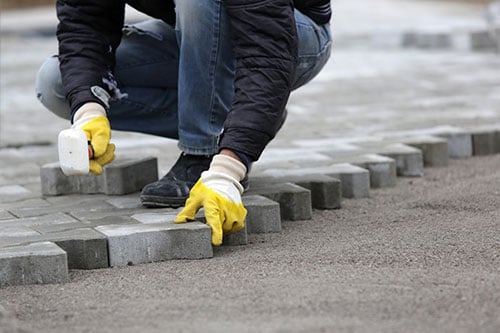
Pavers are multi-colored pieces of concrete that are interlocked to form a durable surface for driveways, walkways and patios.
What Is Flagstone?
Flagstone is a natural stone material commonly used for patios, walkways, and garden paths. It’s characterized by its flat, irregularly shaped slabs, which are typically made of sandstone, slate, or limestone. Flagstone gives patios a rustic, organic appearance.
Stamped Concrete vs. Pavers: Pros and Cons
While stamped concrete is relatively new, pavers have been used for hundreds of years, creating Spanish monastery courtyards, European village pathways, and breathtaking hardscapes in homes across the globe.
While pavers have earned a time-tested reputation for exceptional durability, they do have a few limitations that make stamped concrete a popular choice for homeowners who want especially complex or ornate design patterns.
Pavers and stamped concrete both have strengths and weaknesses that can be especially relevant, depending on where you live.
Why Should I Consider Stamped Concrete?
Thanks to its distinctive textures and variations, stamped concrete offers more ornate design possibilities and a better chance to deliver that “wow” factor. But the advantages don’t stop there:
- Stamped concrete offers a wide array of colors and patterns.
- Since concrete highly workable, so you can mix and customize colors directly on site.
- Stamped concrete can be sealed to provide extra protection against weather, auto leakage, and swimming pool chemicals.
- With its nearly limitless potential for customization, stamped concrete can closely imitate segmented paving or natural stone.
What are the downsides of stamped concrete?
Before you set your heart on stamped concrete, you should check your bank balance. Stamped concrete isn't cheap and it requires more maintenance than pavers. There are a few other things to consider, including:
- Since installation can be a challenge for do-it-yourselfers, a professional installer is often required.
- Concrete is very prone to cracking, especially in climates that feature a lot of freezing and thawing.
- Earthquakes and foundation issues could cause stamped concrete to crack.
- Because control joints and saw cuts are required to mitigate cracking, interruptions can occur across stamped pattern lines.
- De-icing salts can deteriorate ornate designs.
- Since colors can fade under the sun, it’s not always easy to find accurate matches when repairs require patching.
- Stamped concrete should be re-sealed at least once a year.
Are Pavers a Better Choice?
Unlike stamped concrete, properly installed pavers don’t usually crack. They also come with a number of other benefits. Here are a few:
- Since they usually don’t need to be replaced, pavers offer better cost efficiency over time.
- Repairs are quick and seamless, allowing easy replacement of cracked or broken pavers.
- Colors and patterns can be mixed and matched to make stunning designs with accents, bandings, and borders.
Is there a downside to pavers?
While it does have some clear advantages over stamped concrete, pavers aren’t perfect. Here are a few of the most notable drawbacks:
- Unless a binding polymer is used, joint sands will need to be topped off every year or two.
- Weeds can sprout up between pavers unless a binding polymer is used to harden the joint sands.
- Improper installation can cause pavers to move or settle over time—especially without proper soil preparation.
- Since lots can be slightly lighter or darker from pallet to pallet, pavers need to be carefully blended to keep them from appearing blotchy.
What About Stamped Concrete vs. Flagstone?
There are pros and cons to stamped concrete and pavers, and the same applies to flagstone.
Flagstone, often used for walkways and patios, provides a natural look. It can be used on uneven terrain and it stays cool on the hottest days.
Here’s a quick look at the advantages of flagstone:
- Flagstone has a unique, irregular, natural look, giving outdoor spaces a bit of rustic charm.
- Flagstone doesn’t hold heat, so feet feel cooler compared to concrete—that makes it an especially good choice for hot climates.
- Flagstone is a low-maintenance material. Occasional sealing will protect the surface and make it last longer.
- A natural material, flagstone is an environmentally friendly option.
Some red flags:
- The irregular shapes and sizes of flagstone pieces can make installation tougher and more time-consuming.
- Some flagstone options can be slippery when wet, which can create safety issues.
- If you’re looking for a consistent, contemporary design, flagstone’s distinct, rustic look may not be for you.
Stamped Concrete Driveway vs. Pavers vs. Flagstone : A Review
As you can see, there are advantages and disadvantages to both concrete pavers and stamped concrete, along with flagstone.
If you’re concerned about maintenance, fading, repairs, and climate-related cracking, pavers are probably your best bet.
If you’re looking for the “wow” factor, stamped concrete may be the way to go.
And if you want a natural, rustic look, you should consider flagstone.