Refrigerants and Your Air Conditioner

What homeowners need to know about refrigerants and their A/C
Air conditioners are complex systems, with many moving parts that work together to keep your home cool. One of the most important pieces of the system is refrigerant. As a homeowner, you should understand the basics of how refrigerants work and how they impact repairs to your system.
Your home’s A/C needs refrigerant to provide you with cool air. These cooling compounds are mostly gases, and there are several different types that can be used with your A/C’s refrigeration cycle to control the climate in your home.
The most common types of refrigerant used in home A/C units have changed a lot over the years. As we learn more about environmental impacts, efficiency and other factors, new laws phase out different compounds. In fact, homeowners in the United States are in the midst of more changes right now.
What homeowners need to know about refrigerants and their A/C
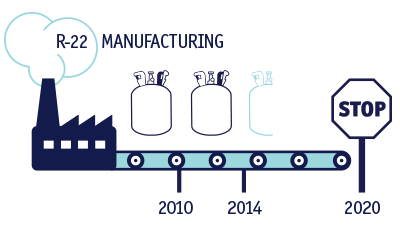
The Environmental Protection Agency (EPA) enacted regulations to better protect the environment. These regulations phased out a certain ozone-depleting refrigerant called R-22 (commonly referred to as Freon®). Since 2015, regulations have prohibited manufacturers from making systems that use R-22.
But if your home’s A/C was manufactured before 2013, it probably uses R-22. That means how you get your A/C repaired in the future might be a bit different than it’s been in the past.

Why was R-22 phased out?
R-22 is an effective refrigerant, but it’s not great for the environment. As experts learned more about R-22 and its impacts on the Earth, they found that it depletes the planet’s protective ozone layer and contributes to the greenhouse gas effect.
As part of the Montreal Protocol, and then later as part of the Clean Air Act of 2010, the EPA mandated that the United States would cease the production and use of R-22 to help stem the harmful impact it has on the atmosphere.
Rather than banning the production of R-22 immediately, the EPA implemented a phase-out schedule to eliminate R-22 use over time. As part of this plan, supplies of R-22 were substantially reduced in 2014. On January 1, 2020, manufacturing or importing R-22 in the United States became illegal.
What does this mean for my home?
If you have an older A/C system, the new regulations will impact how it’s repaired. Don’t worry! You absolutely do not have to purchase a new A/C simply because of the R-22 ban. (Though you certainly can buy a newer and more energy-efficient model if you want to and can afford the cost.)
For example, if your A/C develops a leak and uses R-22, the regulations state that it can still be serviced using R-22. However, costs of R-22 are rising dramatically as supplies become scarce. “Topping off” with R-22 if your A/C develops a leak or other problem isn’t going to be cheap.
That’s why many homeowners are opting for a different solution: having their existing system retrofitted to use alternative refrigerants. These refrigerants are more affordable and better for the environment. However, converting to an alternative refrigerant does require labor and parts replacement to make the system compatible with a new compound.


Alternative refrigerants and your A/C
If you have an older A/C unit, you should read up on what alternative refrigerants are, why you might need them, your options for repairs and other frequently asked questions.
You don't have to be an HVAC technician to benefit from this information. Educated homeowners stay up to date on these changes, and it's not as complicated as you might think! This is your one-stop shop for everything you need to know about alternative refrigerants and what they mean for your home.