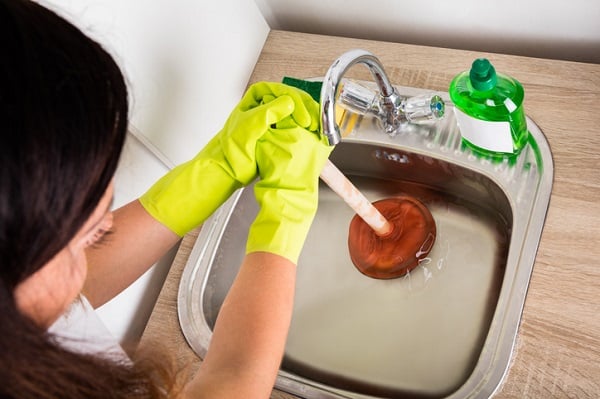
Water damage. Plumbing bills. Foul odors. Broken pipes. Sewage backups. Health hazards. Clogged drains are one of a homeowner’s worst nightmares.
And it’s a whole lot easier—and cheaper—to focus on prevention than repairs. So, if you want to keep your home’s drains free and clear, here are three quick and simple drain cleaning tips you need to know.
Regular cleanings go a long way toward preventing clogs. In your kitchen, focus on the garbage disposal:
- Fill an ice cube tray halfway with vinegar, then add water.
- Freeze the tray.
- Then pop a few ice cubes down the disposal for grinding.
Why Pour Salt Down Your Drain?
Combined with other ingredients, pouring salt down your kitchen sink can help fight clogs and odors.
What does pouring salt down your drain do?
- Because of salt’s coarse texture, it helps scour away built-up grease, soap scum, and other goop from inside your pipes.
- Combined with hot water, salt helps dissolve grease and fats that can clog your kitchen sink.
- Salt has antibacterial qualities that can help neutralize the nasty smells caused by bacteria.
Now that you know why to pour salt down your drain, here are a few tips on how:
- For a small clog, pour a half-cup of salt down the drain, and let it sit for a few minutes. Then flush it down with hot water from the spigot.
- If you have a tougher clog, mix a half-cup of salt with a half-cup of baking soda and pour it down the drain. Then add a cup of white vinegar to create a fizzing action that’ll work the grime free. Let it sit for 10 minutes, then flush it out with hot water.
Why Put Salt Down the Drain in Your Bathroom?
Your bathroom drains will also benefit from being cleaned. You can use a bent wire or a hair-catching brush to clear out those pipes and prevent clogs, but table salt and vinegar are just as effective in these pipes.
- Pour one tablespoon (possibly more, if needed) of salt down the drain.
- Then dump a quarter-cup of plain white vinegar down the drain.
- Let it sit for at least an hour.
- Then run very hot water (but not boiling) down the drain to clear everything out.
What Shouldn’t I Pour Down the Drain?
Some items spell certain disaster for your home’s plumbing. Never put those things down your drain:
- Coffee grounds can create clogs by accumulating and bunching together with other debris. Toss the grounds in the trash or add them to your compost.
- Grease tends to solidify as it cools, gumming up the walls of your pipes and trapping other kinds of debris. To avoid all that, you should pour grease (bacon grease, oil, butter, etc.) into a container for future reuse or put it in your trash disposal.
- Nasty clumps of hair can really slow your drains. Use screens or drain-gates to keep hair out of your drains.
You Build it, We'll back you up.
Learn why so many builders enroll their homes in the 2-10 New Home Warranty Program.
What Should I Do if I Accidentally Put Grease Down My Drain?
- Fill a pot with hot, but not boiling, water.
- Add at least one tablespoon of liquid dish soap to your drain.
- Pour the water down the drain.
It’s important to avoid using boiling water. Pouring boiling water down drains, especially those with PVC pipes, could do damage.
And here are some things that shouldn’t go in your garbage disposal.
Can Hot Water Prevent Clogged Pipes?
You’ve read about some drain cleaning tips. Now here’s a tip for stopping clogs before they happen. Just run hot water down your drains after you use the kitchen sink. It’ll help clear out any leftover food debris and make cleaning your drains quicker and easier in the future.
What About My Garbage Disposal?
However, if your garbage disposal is the main concern, you’ll actually want to use cold water. That’s because cold water will keep any grease and oils in a solid state, so they can be disposed of when you turn the garbage disposal on. You can use hot water after you’ve run the disposal.
Drain Cleaning Summary
There are few things that’ll ruin a homeowner’s day more than water damage from a clogged pipe. And there are few issues that are as easily and simply taken care of when you apply a few simple drain cleaning tips:
- Make sure you set and keep a regular schedule of cleaning your garbage disposal drain.
- Combining salt with hot water can scour away built-up grease, fats, soap scum, and other things that can clog your kitchen sink drain.
- A salt and vinegar mixture is a good solution for clearing up your bathroom sink drain.
- Never put coffee grounds, grease, or hair down a drain.
- Run hot water to prevent clogs in your kitchen sink and cold water to prevent build-up in your garbage disposal.
2-10 is here to help
In addition to these maintenance tips, 2-10 Home Buyers Warranty (2-10) can help you solve plumbing drain clogs caused by routine use. Plus, you can access coverage for other important home systems and appliances, along with 2-10’s trusted network of quality, independent repair Pros.