Structural claims can be a massive liability for builders, so it’s critical for builders to have a solution for the most common kinds of claims.
In our last installment, we shared the first 4 lessons learned from 10,000 structural claims. Here are 4 more lessons we've learned through decades of investigating and repairing structural defect claims. As always, the good news is that an insurance-backed structural warranty can help manage these risks, protecting builders’ financial well-being and hard-earned reputation.
Read Part 1 of this series here.
Lesson 5: Water Can Be a Huge Problem
Water can be a home’s greatest enemy. Water infiltration beneath a foundation is the primary catalyst that causes active soils to move, which can cause catastrophic structural defects. That’s why proper water management is essential to mitigating this risk.
Excessive precipitation and irrigation water should not be allowed to soak into the soil located near the foundation. A best practice is to grade the soil surface at least 6 inches downward for the first 10 feet away from the foundation. Steeper grades are sometimes used to help compensate for potential soil settlement over the life of the home.
Irrigation sprinklers should point away from the home and not over-irrigate near the foundation. Builders should establish the grade and irrigation settings and then inform homeowners to maintain them.
Lesson 6: Geotechnical Investigations Are a Necessity
Building a home without a geotechnical investigation to explore the hidden subsurface is a bit like driving a car blindfolded—you can’t see what you’re doing, can only hope for the best, and the consequences can be catastrophic.
A geotechnical investigation (aka soil report) conducted by a geotechnical engineer is primarily used to analyze and characterize subsurface conditions. It identifies geologic hazards that are the underlying causes of expensive structural defects.
Geologic hazards that a soil report can identify include:
- Active soils
- Fill material
- Buried debris
- Collapsible soils
- Organic soils
- Soft or loose soils
- Rock
- Unstable slopes
- Shallow groundwater
The cost of the investigation may be offset by not over-designing the foundation, avoiding the need to import fill, avoiding construction delays and cost overruns due to subsurface surprises, and by demonstrating proper due diligence in the design and construction of the home.
A soil report also provides site development recommendations and design criteria used by a structural engineer to design the foundation. You only get one chance to get the foundation right.
Lesson 7: The Critical Importance of ‘Engineered’ Fill Material
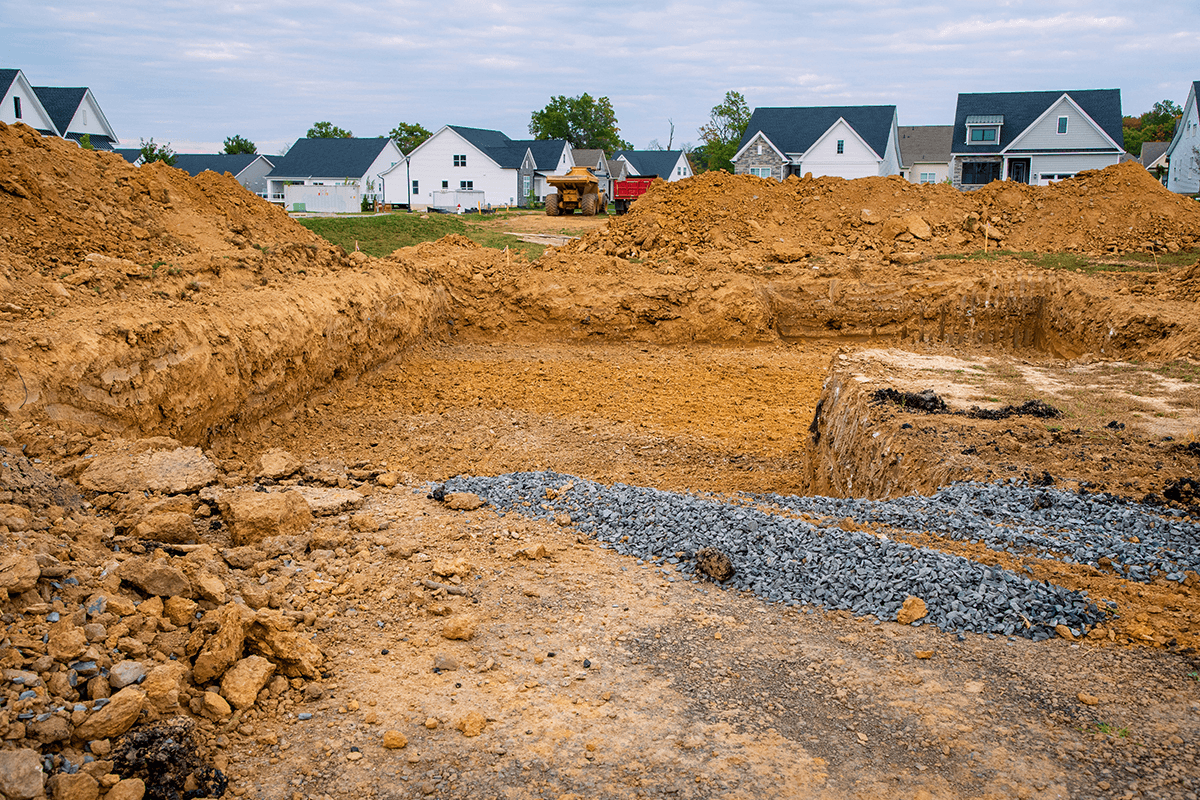
The construction industry refers to fill material as dirt. When we think about the word dirt in general, we don’t naturally think about a critically important structural material that supports home foundations. But it’s a profoundly important element of home building.
Codes, standards, and engineers refer to the dirt located under load-bearing foundations as “engineered” fill material. This engineered fill is arguably the most important structural component in home construction. If the engineered fill isn’t stable, then every structural component it supports is at risk of failure.
For fill material to be “engineered,” a qualified professional engineer shall develop site-specific specifications including fill quality, fill thickness uniformity, placement on slopes, and lift thickness, along with moisture content and density compaction criteria. Engineered fill also means that a representative of the engineer shall observe fill placement and conduct sufficient testing to certify compliance with fill specifications.
Most often foundations don’t fail—people do. Fortunately, there are ways to overcome this issue. Home builders should ensure that fill is engineered, just like engineering required for concrete, wood, and steel structural components. Foundation failures caused by fill are usually avoidable if home builders comply with code and engineer’s recommendations.
Lesson 8: Misconceptions About the Common Crack
If there’s one thing that a home builder can guarantee, it’s that ALL homes will experience cracks. A challenge for home builders is that cracks are a leading concern for homeowners, but not all cracks are signs of structural defects. Regardless, homeowners want their builders to repair cracks no matter what, and that often leads to disputes.
Most common cracks are “cosmetic,” but homeowners often misconceive them as being “structural.” Common minor cracks will appear in brittle materials such as concrete, grout, mortar, drywall, tile, wood, stone, brick, and stucco.
All new structures go through an initial period of foundation and architectural settlement. They also experience ongoing seasonal expansion and contraction related to temperature and moisture content, which will cause normal cosmetic cracks in finishes throughout the structure.
Structural cracks are typically much wider than cosmetic cracks and are likely to be accompanied by other indications of structural distress, including inoperable doors or windows, out-of-level or out-of-plumb surfaces, or significant displacement across the crack.
An effective builder warranty—such as a builder warranty from 2-10 Home Buyers Warranty—can provide construction performance standards for cosmetic cracks.
Qualifying cosmetic cracks are typically repaired by the home builder during the one-year workmanship term. Thereafter, the homeowner is responsible for repairing cosmetic cracks as routine maintenance.
Determining whether cracks and related structural distress are indicative of a qualifying structural defect requires professional expertise. A builder warranty helps establish legal obligations for the home builder, warranty company, and homeowner, thereby helping reduce disputes.
2-10 Can Help Manage Structural Risks
The good news is that most callbacks, homeowner complaints, and claims are avoidable. Home builders can take control by complying with code and industry best practices. This includes a focus on the foundation, using geotechnical investigations, engineering fill material, managing surface water, and using a strong third-party warranty to help protect and grow the business.
Additionally, builders can help educate homeowners on their maintenance responsibilities. 2-10 helps facilitate that education with a Home Maintenance Guide that’s included in every 2-10 builder warranty.
2-10 is a leader in builder warranties. Our claims experience and engineering expertise consistently help our Builder Members effectively manage their risk.
Visit www.2-10.com/builder for more information about how 2-10 can help you protect your profits, promote your quality, and plan for a successful future, and reduce some of the most common causes of structural claims.