Every other day a headline talks about the housing market; whether there’s not enough homes, or whether mortgage rates are sufficiently low, or even the potential of a 50 year mortgage for homeowners looking for lower monthly payments. The basics of housing supply and demand must take into account both existing housing inventory and new housing.
We wanted to know: do Americans have a preference when it comes to buying homes? Do they trust the proven stock of old homes, or are they invested in being their homes’ first owner?
Methodology
In December 2025, we surveyed 501 home buyers and 501 current homeowners on their experiences living in both old and new homes, as well as what their overall preferences were. For home buyers, 49% were men, 49% women, and 2% either nonbinary or chose not to disclose, while ages ranged from 21 to 78 with an average age of 41. For homeowners, 49% were men, 49% women, and 2% either nonbinary or chose not to disclose. Ages ranged from 19-78 with an average age of 46.
For the purposes of this survey, “old” homes are defined as homes built 2019 or earlier unless otherwise indicated, while new homes are 2020-present with new-build homes specified.
Home Buyer Priorities and Preferences
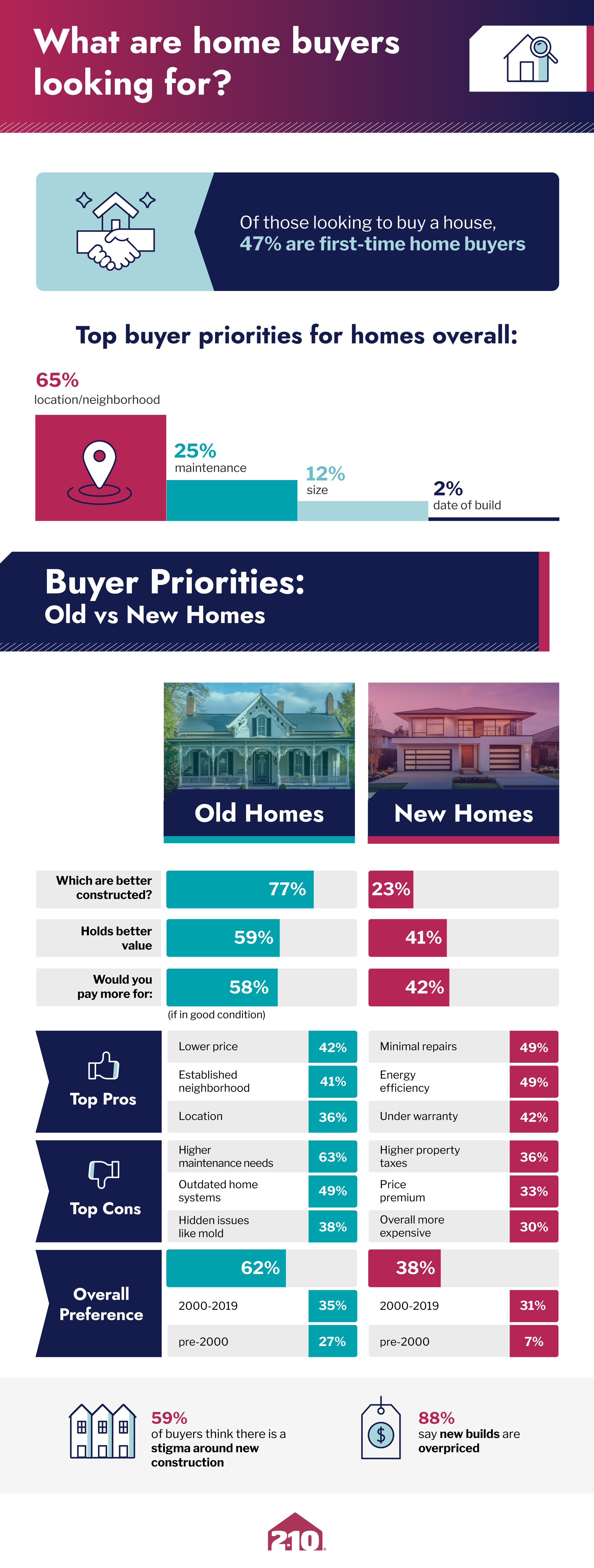
Among those who indicated they were in the homebuying process, 47% stated they were first time home buyers. With that in mind, consider that roughly half of respondents have some experience in buying a home, while half don’t.
Home buyers are primarily prioritizing the neighborhood of their homes with 61% indicating location as their top priority, followed by the home’s overall maintenance profile/history (25%), its size (12%), and finally its date of build (2%).
Old vs New Homes: What Buyers are Looking For
We put old and new homes head-to-head to see what buyers prefer. Overall, by a margin of 62% to 38%, the home buyers preferred old homes. Broken down further, 35% prefer homes built 2000-2019, while 27% prefer homes built before the new millennium; on the new side, 31% prefer homes built 2020-present, while 7% prefer custom-built homes.
Most buyers surveyed (77%) believed old homes are better constructed, compared to 23% favoring new homes for superior construction. Along the same lines, 59% said old homes hold better value compared to 41% of new homes, and consequently, 58% would pay more for an old home in good condition compared to 42% willing to pay more for a new home.
Pros and Cons of Old Homes, According to Buyers
Top pros of old homes include a typically lower price (42%), being in an established neighborhood (41%), and overall location (36%). However, it’s not all roses for old homes, as anyone who has had to manage asbestos remediation can tell you: top cons for old homes include overall higher maintenance needs (63%), outdated home systems like plumbing or electric (49%), or hidden issues like mold or the aforementioned asbestos (38%).
Pros and Cons of New Homes, According to Buyers
New homes appear to be an answer to many of the dominating detractors of an old home: 49% of respondents cite a major pro in minimal repairs needed in new homes, as well as modern amenities (also 49%); close behind is the added security of many appliances and house components still being under home warranty (42%). On the other hand, newness has costs, literally: top cons are higher property taxes (36%), a price premium for new construction (33%), and overall a higher price (30%).
Given these head-to-head stats, it’s no surprise that 88% say new builds are overpriced– and that 59% sense a stigma around new construction.
Homeowners Weigh In: Old vs New Homes

We asked homeowners the same sets of questions to see how those who already own answer– and how it compares to those actively hunting. Yet again, old homes win overall preference at 60% compared to 40% for new homes, with a third preferring 2000-2019 homes and 27% opting for homes built before 2000. While 48% of new homeowners currently live in a custom build, none cited it as their preferred option when asked about future home preferences.
Over 4 in 5 homeowners surveyed feel old homes are better constructed compared to just 19% for new homes, and two thirds believe old homes hold more value compared to 34% voting for new homes. Similar to buyers, 59% said they would pay more for an old home in good condition than a new home (41%).
Top Pros and Cons of Old Homes, According to Homeowners
Homeowners loved the lower prices (45%), established neighborhoods (44%) and higher quality construction materials (38%) that old homes bring to the table. It’s interesting to note that those with lived homeowning experience are even more focused on maintenance-related pros and cons. Similar to home buyers, higher maintenance needs are the top con (63%) among homeowners, followed by outdated home systems (48%), and less energy efficiency (40%).
Despite all this, only 9% of current “old” homeowners regret their purchase.
Top Pros and Cons of New Homes, According to Homeowners
New homeowners have unique insight into their homes, and it seems buyers were on track in their priorities. The best aspects of new homeownership include having minimal repairs needed (58%), energy efficiency (53%), and having appliances still under warranty (35%), which keeps costs down. On the other hand, many complain of higher property taxes (38%), HOAs (33%), and minimal landscaping (28%), which reduces overall neighborhood curb appeal and makes summers that much hotter with no trees to shade.
Roughly 1 in 10 (11%) of new homeowners regret their purchase.
Top Old and New Home Statistics
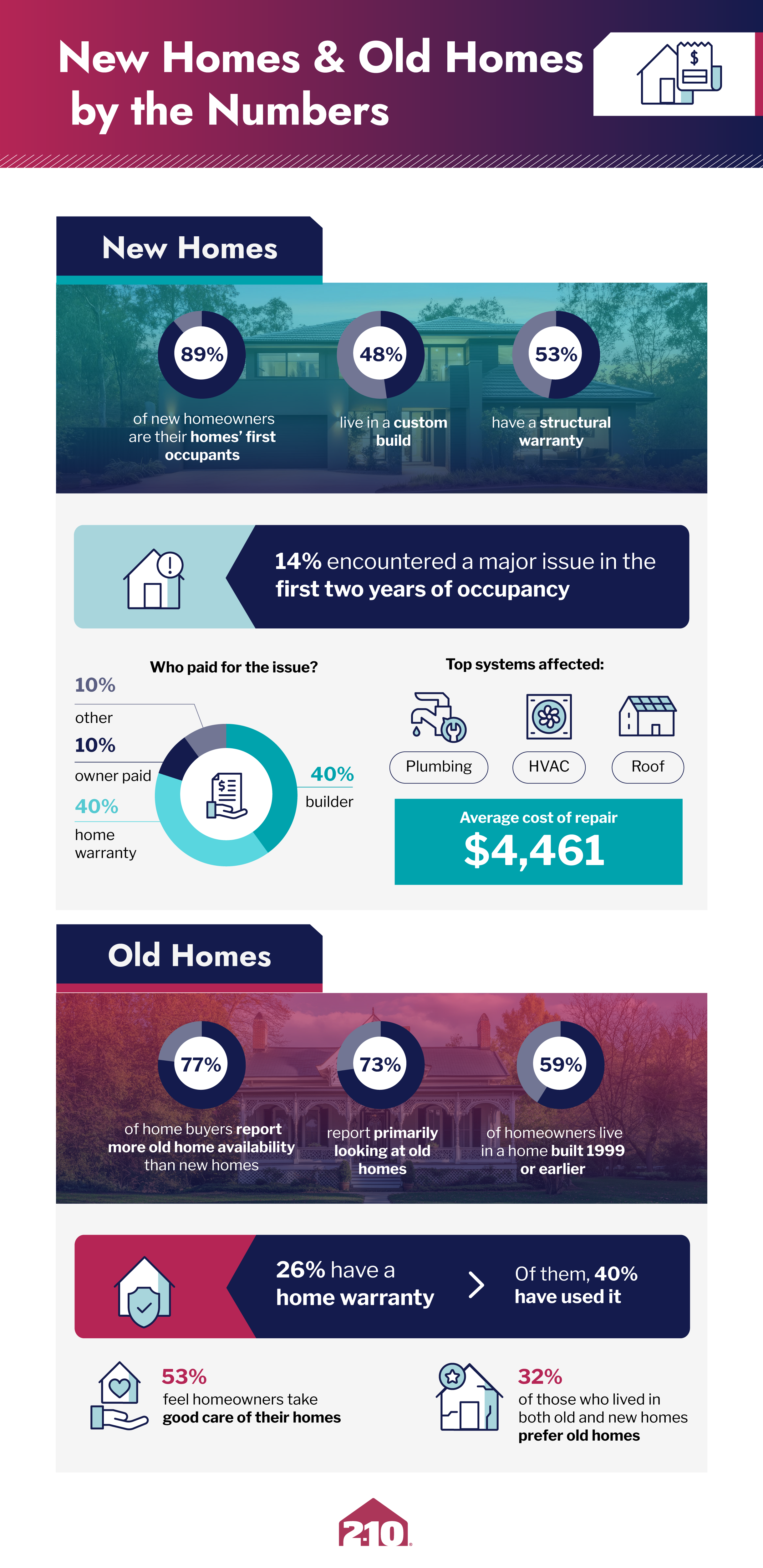
The overwhelming majority (89%) of new homeowners are their homes’ first occupants. Over half (53%) have a structural warranty on their home, which provides peace of mind in case build-related issues occur, like a foundation settling incorrectly.
Speaking of issues, it seems even newer builds aren’t immune to home repair problems: 14% of new homeowners encountered a major issue in the first two years of occupancy. Top home systems affected included plumbing, HVAC, and roof, and the average cost of repairs was $4,461. As for who paid, 40% said the builder covered the issue, followed by a home warranty at a similar 40%, then owner (10%), or other (10%).
It’s not shocking that 77% of home buyers report more old home availability than new homes, even if new builds happen every day. As such, 73% are prioritizing looking at old homes. Roughly 3 in 5 current homeowners live in a home built before the year 2000; 26% have a home warranty and of them, 40% have had to use it at some point. Generally, 53% of the Americans surveyed feel homeowners take good care of their homes.
When it comes down to it, among those who have lived in both old and new homes, 32% prefer old homes; the remaining 68% still prefer new homes.
Old or New - Find the Warranty Right for You
Whether you have a stately, 19th century brownstone or a brand new custom build, knowing your homes are protected with a home warranty or structural warranty provides peace of mind. Investing in a home is a huge life milestone, no matter its age– and we’re here to help you get the best out of your homeownership experience.
Look at the 2-10 plan offerings to find the home warranty right for you.
For media inquiries, reach out to media@digitalthirdcoast.com.
Fair Use
When using this data and research, please attribute by linking to this study and citing 2-10.com.