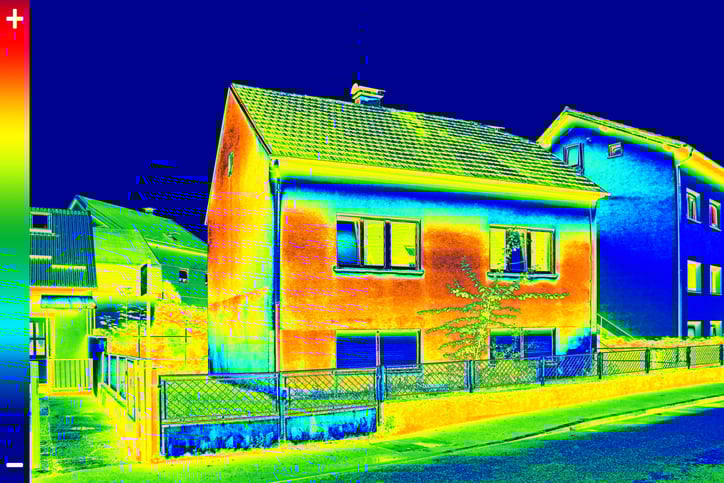
Ever wonder where all your heat goes? Heat loss in homes happens when warm air escapes through drafty windows, thin insulation, leaky ducts, and even tiny gaps you can’t see.
This results in chilly rooms, rising energy bills, and a heating system that’s working overtime to keep up, which can lead to a breakdown just when you need it most.
A Heat Loss Prevention Guide to Keep You Warmer in Winter
Here’s a guide to help you identify, diagnose, and prevent house heat loss in your home so stop shivering and start saving.
How can I tell if I have heat loss in my home?
Ask yourself these three questions:
- Do you feel drafts around your doors and windows?
- Are there gaps around outlets and fixtures?
- Is your roof frost-free when your neighbors’ roofs have frost?
If you answered yes to any of those, you’re probably losing lots of heat, meaning you have to run your heater for longer and at higher temperatures to stay warm. And that can shorten your heating system’s life expectancy. It’s time to get serious about heat loss prevention.
How can I keep more heat inside my home?
Here are a few simple and inexpensive heat loss prevention steps you can take right now:
- Add weather stripping around doors and windows.
- Put plastic shrink insulation on windows to reduce drafts.
- Caulk all cracks around windows, outlets, fixtures, and door trim.
- Hang heavy drapes or curtains.
- Beef up attic insulation.
- Seal all your ductwork.
Where is the Most Heat Lost in a House?
Here are the three most common problems that cause heat loss in a home.
1. Cracks in windows, doors & walls
No matter how small, those little gaps are the most typical cause of heat loss in homes.
How can I test my doors and windows for leaks?
- Run your hand over the edges of windows and doors and feel for drafts.
- Light a candle and move it around windows and doors. If the flame flickers, you’ve found a leak.
- Simply look for daylight shining through around door and window frames.
What can I do to reduce heat loss in my home from leaky doors and windows?
- Caulk around window and door frames to create an airtight seal.
- Install weatherstripping around your doors and windows to keep air from escaping through the edges.
- Install door sweeps at the bottom of your exterior doors to seal the gap between the door and the threshold.
- Put up insulated drapes or blinds to help block drafts and reduce heat loss from your windows. According to the Department of Energy, draperies can prevent up to 10% of heat loss in a home. Think of drapes as a warm winter coat for your windows.
What about walls and heat loss in a home?
Over time, the insulation in your frame walls can degrade, making heat loss more noticeable. Unfortunately, this is one area where you’ll need professional help outside of your Home Service Plan coverage.
A professional can check your insulation to see if you need to upgrade it. They can also help you choose between loose fill or blown-in cellulose, fiberglass, mineral insulation, or spray foam.
2. Cracks and holes in the attic
The second most common reason for heat loss in homes is also one of the easier and cheaper fixes. When you find cracks or holes in your attic, there are two ways to fix them.
- Seal all your attic’s cracks and holes with caulk or insulation.
- Make sure you have enough existing insulation and add more if needed.
These simple fixes can make your home much more comfortable and more energy-efficient. You’ll save money on utility bills and keep your home’s heating system from overworking.
3. Basement and subfloor walls
Did you know your basement walls can be responsible for up to 20% of heat loss1 in your home? This is especially true if you have an unfinished basement. If you don’t plan on having it finished, you should definitely insulate the walls for heat loss prevention. You can install rigid foam insulation boards that are several inches thick directly against the concrete wall.
Heat Loss Prevention: Summary
Cracks and gaps in doors, windows, and walls may be robbing you of warmth and money. Fortunately, tackling heat loss in your home doesn’t have to be a major, costly project.
- The first step is detection—you should be able to see or feel that you’re losing heat.
- Next, check up, down, and all around your home for the leaks in your door, windows, walls, attic, and basement.
- Then get to work sealing those gaps—most of it you can do yourself with caulk, insulation, and weatherstripping.
- Start enjoying cozier winters, lower energy bills, and a longer-lasting heating system.
Protect Your Budget with 2-10
Heat loss can do more than make you uncomfortable. It can also overwork your heater. Before your heater breaks down from overworking, consider a home warranty through 2-10 Home Buyers Warranty (2-10). A 2-10 home warranty can protect your budget against covered breakdowns to your systems and appliances.
1 https://www.buildwithrise.com/stories/insulate-your-basement-like-a-pro