For many Americans, housing isn’t simply an address, but a question of pride, stability, and peace of mind. But the path from renting to owning isn’t always easy.. To better understand how mindsets shift when moving from renting to owning a home, 2-10 surveyed more than 1,000 U.S. adults about how they handle home maintenance, responsibility, and the stress that comes with it.
The results show there is an emotional and practical gap between renting and owning. Financial pressure and uncertainty around repairs are a major reason for this divide.
Methodology
In this nationwide survey, 2-10 gathered responses from 1,006 U.S. adults. The sample was evenly split by gender (50% male, 49% female, 1% non-binary) and represented a mix of living environments: 29% urban, 54% suburban, and 17% rural. Participants ranged in age from 19 to 80, with an average age of 43.
At the time of the survey, 54% of respondents were homeowners, 43% were renters, and 3% reported another living arrangement.
Renting with Hopes of Homeownership on the Horizon
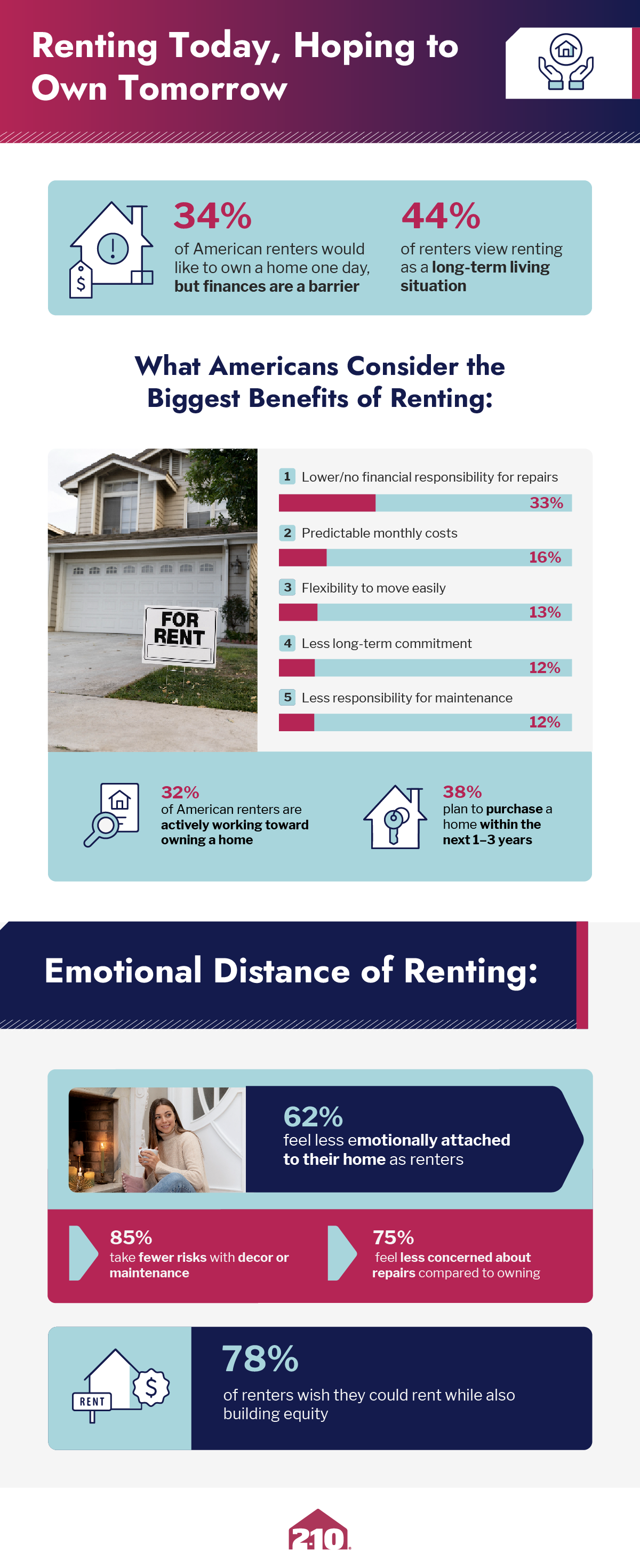
For many renters, renting feels practical, but not permanent. While 56% of those surveyed view renting as a short-term situation, nearly half (44%) see it as long-term. That tension shows up in how renters think about the future: 34% say they’d like to own a home someday but feel finances are a barrier, and another 23% want to own but aren’t sure when. A hopeful 32% of renters are actively working toward homeownership, and 38% plan to buy within the next one to three years. However, 5% say they don’t want to own a home at all.
What keeps renters renting often comes down to predictability and protection. The most commonly cited benefits of renting include lower or no financial responsibility for repairs (33%), predictable monthly costs (16%), flexibility to move easily (13%), less long-term commitment (12%), and less responsibility for maintenance (12%).
That reduced responsibility also creates emotional distance. Nearly two-thirds of surveyed renters (62%) say they feel less emotionally attached to their home, while 85% take fewer risks with décor or maintenance. Three in four (75%) say they feel less concerned about repairs compared to owning, and only 14% admit to ever making improvements without landlord approval. Security deposits matter too: 59% say getting theirs back is very important, 27% say it’s somewhat important, and only 10% say it’s not important.
Despite these trade-offs, renters clearly want more. More than three-quarters (78%) say they wish they could rent while also building equity, highlighting a desire for ownership benefits without the full weight of responsibility.
1 in 4 New Homeowners Felt Unprepared to Handle Repairs
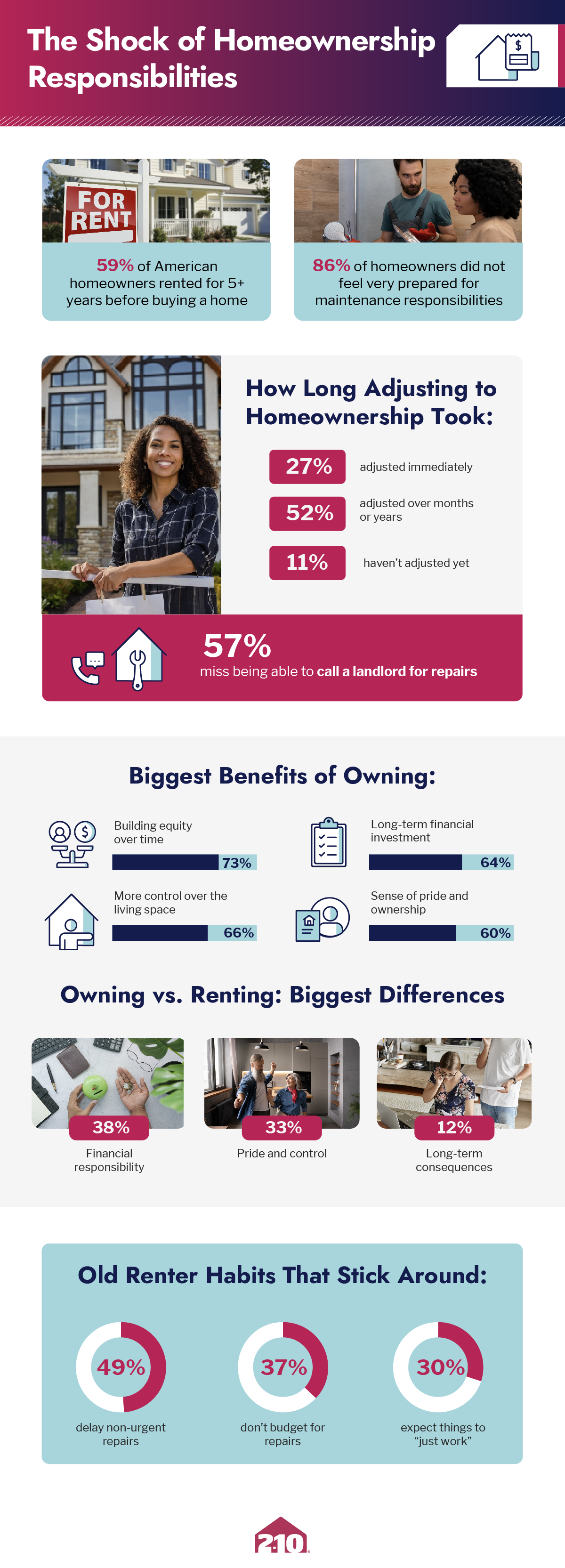
For homeowners, the transition away from renting often comes with surprises. Nearly 6 in 10 of surveyed homeowners (59%) rented for five or more years before buying, yet only 14% felt very prepared for maintenance responsibilities when they became owners. Most felt only somewhat prepared (61%), and 1 in 4 admitted they were unprepared.
The learning curve of home maintenance for new homeowners takes time. While 27% adjusted immediately, more than half (52%) say it took months or even years to feel comfortable being responsible for repairs. Another 11% say they’re still adjusting. It’s no surprise, then, that 57% of homeowners say they miss being able to call a landlord when something breaks.
The biggest shift is financial. When asked what feels most different about owning, 38% pointed to financial responsibility, followed by pride and control (33%) and long-term consequences (12%). Old renter habits also linger: nearly half of homeowners (49%) still delay non-urgent repairs, 37% don’t budget for repairs, and 30% expect things to “just work.”
Top Benefits of Homeownership
The advantages of ownership are clear, especially in terms of financial security and personal autonomy. Homeowners most often point to the following benefits as the primary reasons owning outweighs renting:
-
- Building equity (73%)
- Control over their living space (66%)
- Long-term financial investment (64%)
- A strong sense of pride and ownership (60%).
Despite the stress, 79% say they’ve never regretted buying a home, and 89% prefer owning over renting. That said, 21% admit they have regretted homeownership at one point or another.
72% Delay Home Repairs Due to Cost
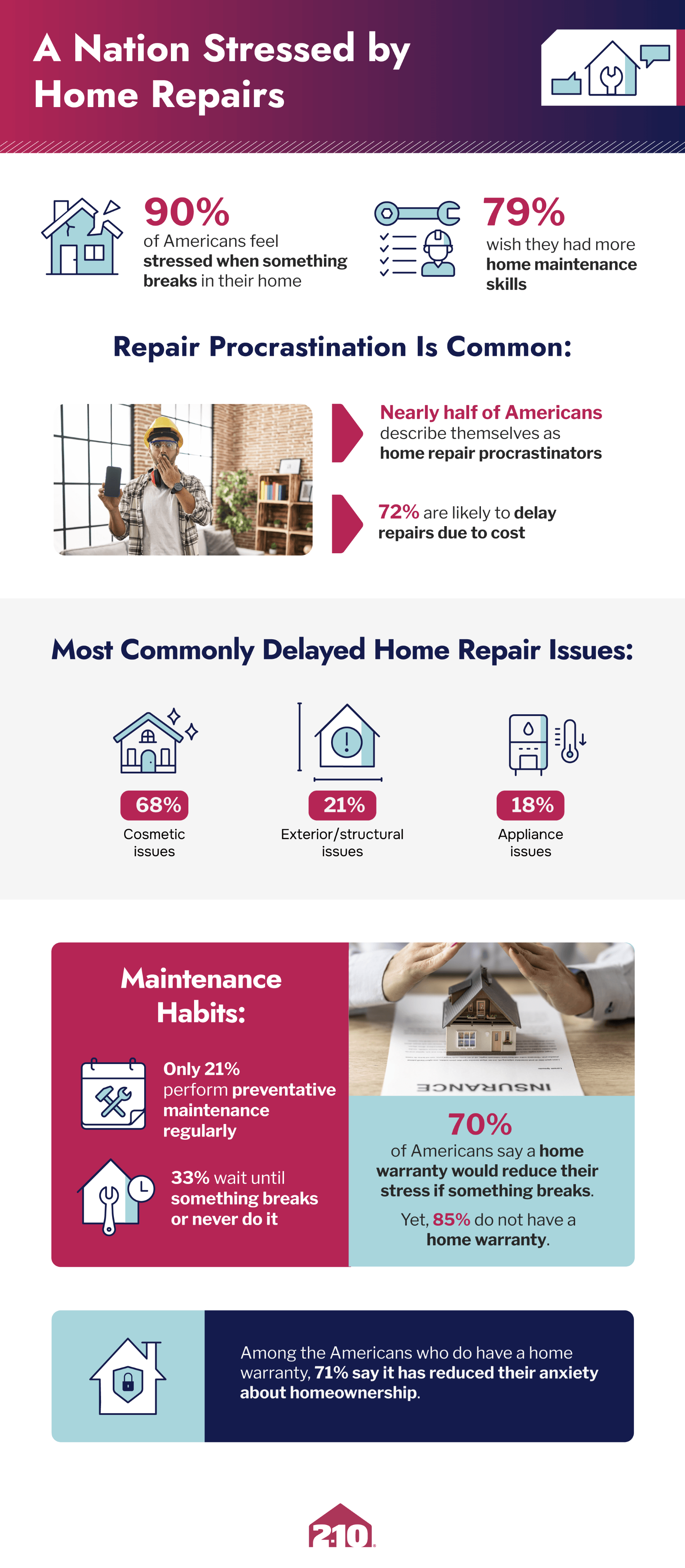
Whether renting or owning, home maintenance is a major source of stress. Nine in ten of those surveyed (90%) say they feel stressed when something breaks in their home, and 79% wish they had more home maintenance skills. Only 13% feel very confident handling home-related problems on their own.
Cost is a major cause of delayed maintenance. More than 7 in 10 (72%) say they’re likely to postpone repairs due to expense, and nearly half (49%) openly describe themselves as home repair procrastinators. Cosmetic issues are the most commonly delayed (68%), followed by exterior or structural problems (21%) and appliance issues (18%). This data shows why the right network of contractors can be hugely beneficial.
Generally, preventative maintenance is inconsistent. Just 21% perform it regularly, while 46% do so occasionally. One-third admit they only address issues when something breaks, or never at all. Home maintenance for new homeowners can be especially stressful.
This stress explains the growing interest in additional protection. Seventy percent of those surveyed say a home warranty would reduce their stress when something breaks, yet 85% don’t currently have one. Among the 15% who do, the impact is clear: 71% say it has reduced their anxiety about homeownership.
Predictability Is the Missing Piece
Across renters and homeowners, one theme stands out: people want fewer surprises. Renters value predictability and low risk, while homeowners crave clearer guidance, more manageable costs, and help navigating repairs. When asked what would make homeownership feel less overwhelming, respondents pointed to predictable repair costs (24%), help finding trustworthy contractors (24%), and clearer guidance on what needs to be fixed and when (16%).
That’s where 2-10 can help. A home warranty provides an added layer of predictability by helping cover the cost of unexpected breakdowns in major systems and appliances, giving homeowners a trusted path forward when something goes wrong. For those navigating repairs for the first time, or who are simply tired of surprise expenses, a home warranty from 2-10 can make the responsibilities of homeownership feel far more manageable. Homeowners looking for guidance or support can contact us today to explore coverage options and get answers when they need them most.
Media Inquiries & Fair Use
For media inquiries, contact media@digitalthirdcoast.net
When using this data and research, please attribute by linking to this study and citing 2-10.com.