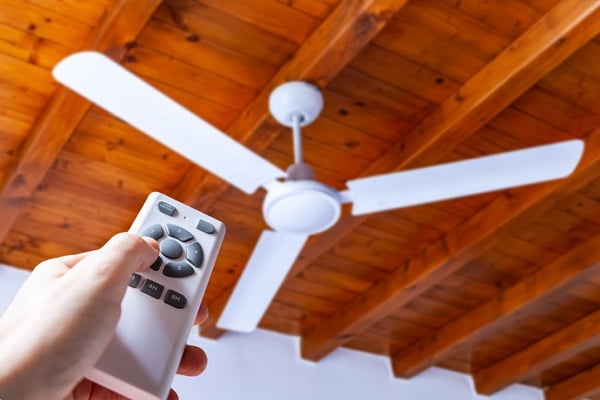
Yes, reversing your ceiling fan in winter can actually help you feel warmer and potentially reduce your heating bill. Let’s dive into the science behind it and how to make the most of your fan year-round.
Why Reverse Your Ceiling Fan in the Winter?
First, when we say "reverse your ceiling fan," we mean making it turn clockwise when you're looking up at it. In the summer, it should turn counterclockwise. If you're like most people, you associate ceiling fans with cooling off in the summer. But here’s the secret: reversing the direction of your ceiling fan in winter helps push warm air back down into the room, making it feel warmer without touching the thermostat.
This simple trick is one of the smartest energy efficiency tips you can use during the colder months.
The Physics Behind Ceiling Fan Direction
To understand how a ceiling fan works, let’s first take a look at the airflow in a home’s typical room.
Warm air rises, meaning the hot air your heating system produces ends up lingering near the ceiling. Meanwhile, the cooler air stays lower, right where you are. Since ceiling fan blades are angled, the direction they spin determines whether air is pushed down or drawn up.
In summer mode, the blades spin counterclockwise. This pushes cooler air downward, creating a wind-chill effect that makes you feel cooler even if the actual air temperature doesn’t change.
In winter mode, the blades spin clockwise. This pushes warmer air, which rises, down toward you, making it feel warmer. It doesn’t generate new heat, but it redistributes existing warmth more evenly–which means your heating system may not have to work as hard.
Using ceiling fans properly based on the season can help improve comfort and allow you to adjust your thermostat for better energy savings. Ceiling fans could save you approximately 12% on your energy costs!
Does Reversing a Fan Make It Warmer?
Technically, your ceiling fan doesn’t make the room warmer but it makes you feel warmer by circulating heat more effectively. This means you can often lower your thermostat without sacrificing comfort, leading to better energy efficiency and reduced heating costs.
Which Way Should a Ceiling Fan Turn in Winter?
Your ceiling fan should spin clockwise at a low speed in winter. If you stand under the fan and look up, the blades should appear to move to the right. That’s your visual cue that the fan is set for winter use.
How to Reverse Your Ceiling Fan
Most ceiling fans have a switch or setting that allows you to reverse the direction of the blades. Here's how to do it:
- Turn off the fan: Always start by switching the fan off for safety.
- Locate the direction switch: Look for a small toggle switch on the motor housing near the base. It may be labeled "reverse" or "winter."
- Flip the switch: Move the toggle to the opposite setting to change the direction of blade rotation.
- Turn the fan back on: Set it to a low speed to gently recirculate warm air throughout the room.
- Check your fan remote or app: Some modern fans use digital controls for direction. If you don’t see a physical switch, try the remote or check the app settings.
- Consult the manual if needed: If you’re unsure where the switch is or how to operate your fan model, refer to the manufacturer’s instructions for guidance.
This simple seasonal adjustment helps optimize airflow and improve your home’s energy efficiency.
Additional Energy Efficiency Tips for Winter
Reversing your ceiling fan is just one way to stay warm more efficiently. Here are a few other smart practices:
- Seal windows and doors to keep warm air inside
- Change your furnace filter regularly
- Use a programmable thermostat to manage heating schedules
- Open curtains during sunny days, then close them at night to trap heat
These small changes can make a big difference in how cozy your home feels and how high your energy bill climbs.
Protect Your Home with Confidence
At 2-10 Home Buyers Warranty, we offer home warranty plans for homeowners. Whether it’s your ceiling fan, furnace, or other key systems, we’re here to help you protect your home–and your budget–through every season.