Winter is coming at a time when many Americans are feeling the squeeze, from rising energy costs to lingering worries about weather-related damage. Households are trying to get ready, but not everyone feels confident they’re prepared—or even knows what steps make the biggest difference.
Methodology
To better understand how people are coping this year, 2-10 surveyed 1,002 U.S. adults in late November 2025 about home heating and winter preparedness. The sample includes a nationally representative distribution of regions, generations, and living environments (urban, suburban, rural). Ages ranged from 18 to 78, with an average age of 50; 49% were women, 50% men, and 1% either nonbinary or chose not to disclose.
The results reveal a nation determined to winterize, but still facing surprising blind spots that could impact both their homes and their budgets.
Rising Utility Costs & America’s Top Winter Worries
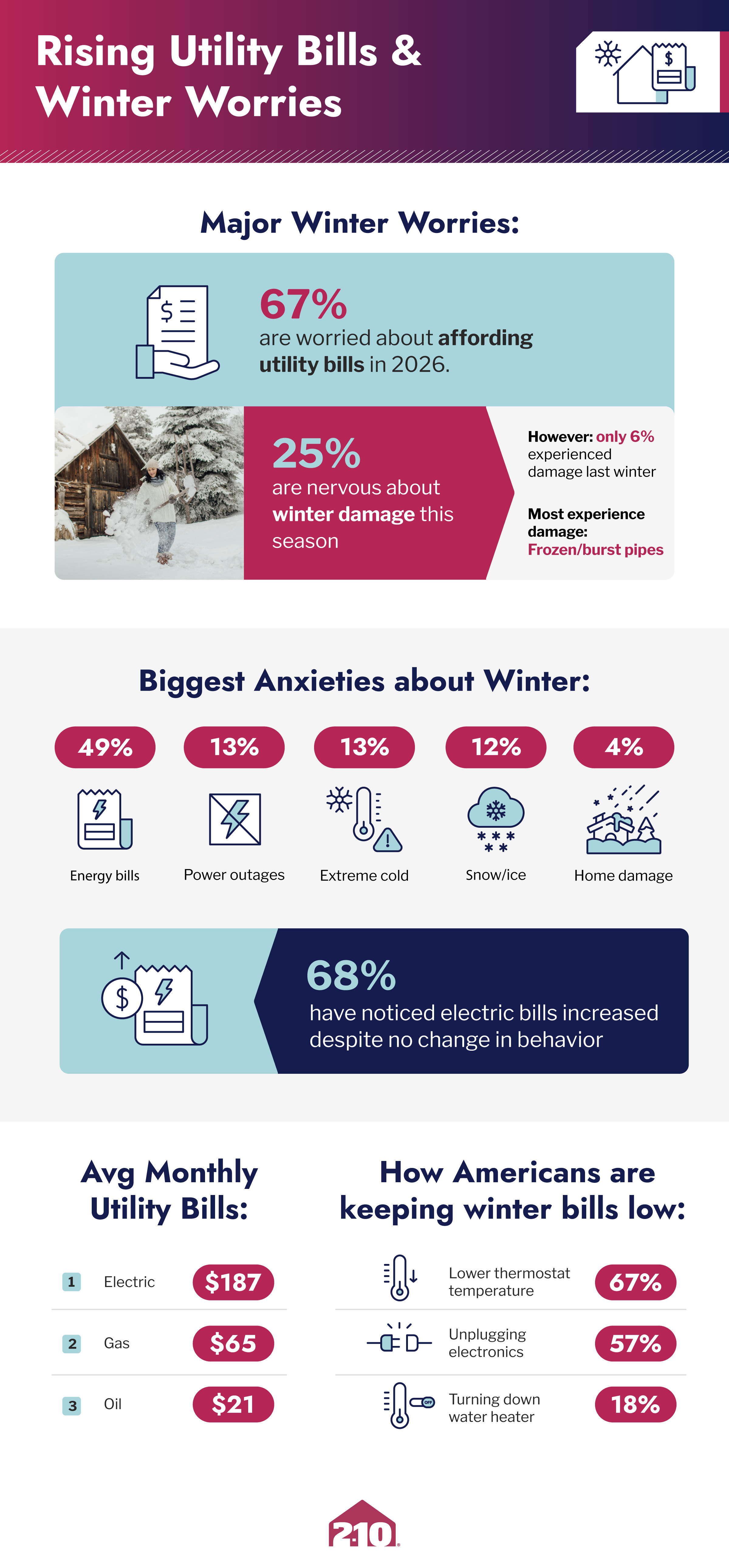
The financial weight of winter is hitting Americans harder than any other concern. Sixty-seven percent of adults say they are worried about affording their utility bills this season, and 49% say energy costs are their number one winter worry—more than extreme cold, snow, ice, or the threat of power outages combined.
Anxiety about winter damage is also growing: 1 in 4 Americans feel nervous about potential damage to their home this year, even though only 6% experienced any last winter. Among those who were affected, frozen and burst pipes were the most common issues, followed by roof and gutter-related problems.
Households are buckling under the fiscal weight of energy costs. More than 2 in 3 (68%) Americans say their electric bills have increased despite no change in behavior, and average monthly costs are substantial, with electricity averaging $187, natural gas around $65, and home heating oil at $21. In response, households are adjusting their daily habits. Sixty-seven percent say they plan to keep their thermostat lower this year, more than half are unplugging electronics when not in use (57%), and nearly 1 in 5 have already turned down their water heater temperature, while another 9% didn’t realize that lowering water temperature was even possible.
How Americans Are Getting Their Homes Ready
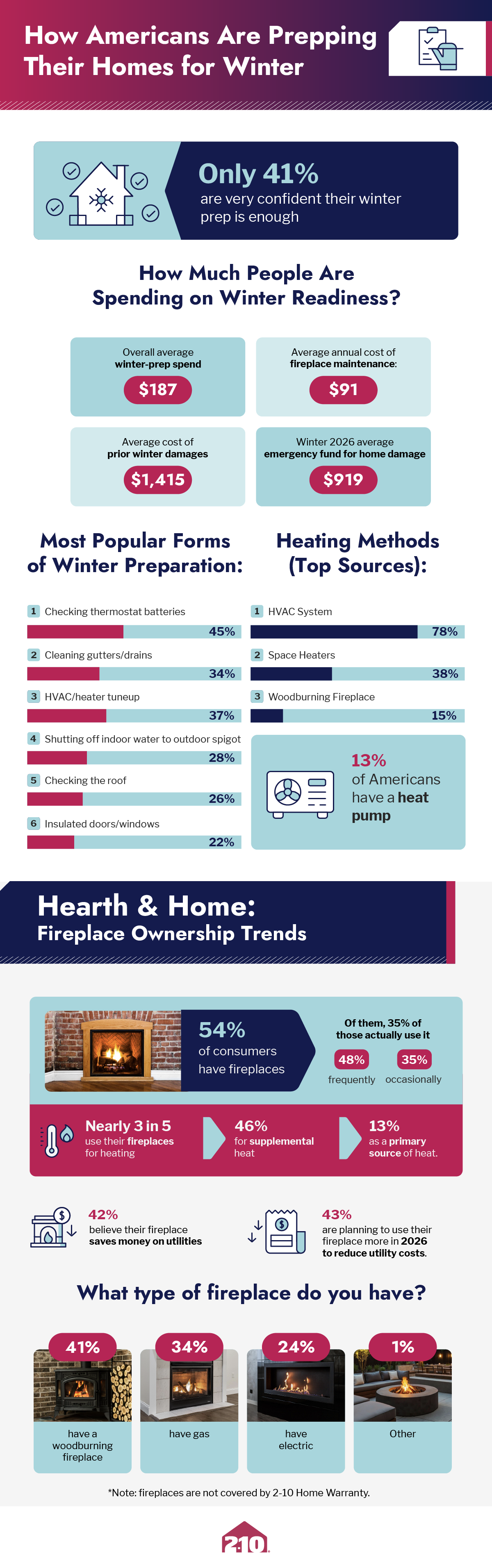
Faced with rising costs and uncertainty, winterizing the home remains a national ritual. Nearly 3 in 4 respondents say they have already taken steps, or plan to take them, to prepare for the cold. Still, only about 2 in 5 feel truly confident that their efforts are enough. On average, people expect to spend roughly $187 on winter prep, and many are setting aside additional funds in case of emergency, with the average winter damage reserve landing just under $1,000.
Top Winter Prep Steps
Americans are taking a variety of steps to get their homes ready for winter. Some of the most common actions people are prioritizing this season include:
- Checking thermostat batteries - 45%
- Servicing heating systems - 37%
- Cleaning out gutters and drains - 34%
- Shutting off interior water lines to outdoor spigots - 28%
- Inspecting the roof for potential snow and ice issues - 26%
- Insulating doors and windows - 22%
- Trimming back trees - 21%
Despite this flurry of preparation, 1 in 6 say they haven’t done anything at all to get ready for winter.
Winter Home Heating & Maintenance Statistics
Heating systems play a central role in readiness. The majority (78%) of Americans surveyed rely on an HVAC system to heat their homes, while more than one-third turn to space heaters to supplement their main system.
Fireplaces also remain a key part of the winter landscape, with just over half (54%) of survey participants owning one. Of those who do, 35% actually use theirs, and nearly half of fireplace users say they light it several times a week during winter. For many households, a fireplace is more than ambiance; nearly 3 in 5 say they rely on theirs for heating—most often as a supplemental source (46%), but occasionally as the primary way they stay warm (13%). Fireplaces also save on utility bills: 42% percent of fireplace owners believe their fireplace lowers their utility bills, and 43% say they plan to use it more next winter to reduce their heating costs.
Important note: 2-10 Home Warranty does not include fireplaces as a covered item.
Winter Prep Missteps: What Americans Aren’t Doing, But Should Be
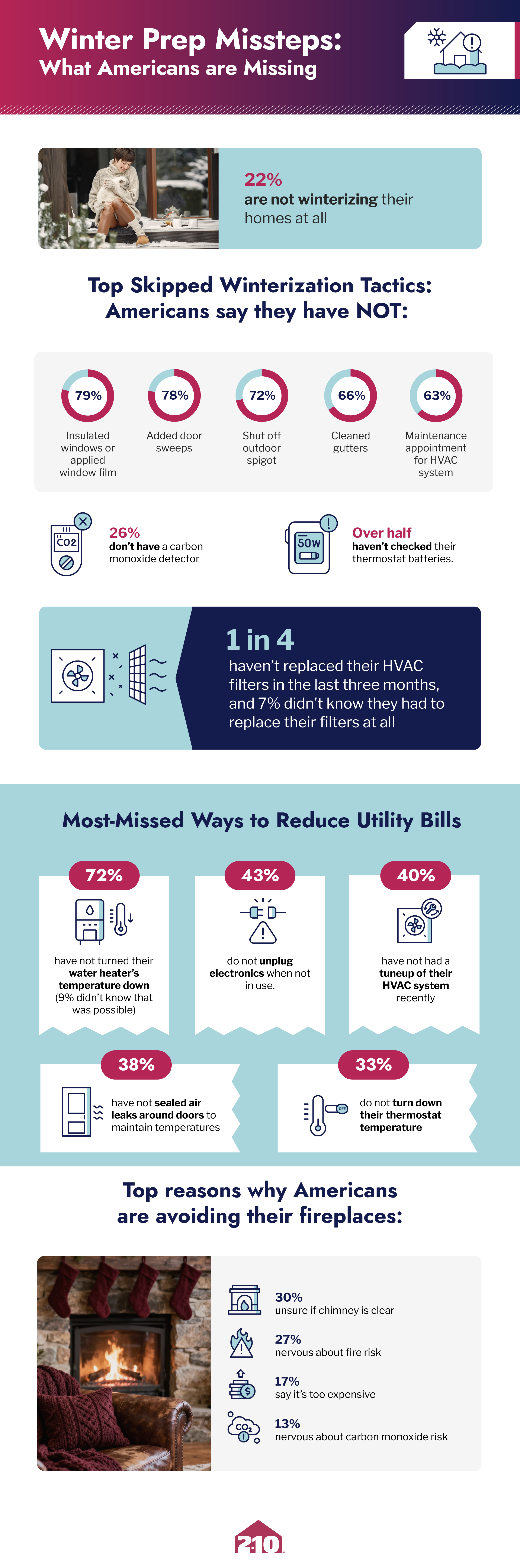
Even though most Americans are taking steps to prepare, many are still missing some of the most important—and often simplest—ways to protect their homes and reduce their bills. Nearly a quarter (22%) of those surveyed haven’t winterized their home at all.
Even those who have prepared could do more and make a huge difference in their bills.
Top Winter Prep Steps Americans Miss
Despite winter approaching, respondents have not:
- Insulated windows or applied window film - 79%
- Added door sweeps - 78%
- Shut off outdoor spigot - 72%
- Cleaned gutters - 66%
- Maintenance appointment for HVAC system - 63%
- Changed their HVAC air filters - 25% (and 7% didn’t even know they were supposed to)
Safety gaps are also common. More than 1 in 4 Americans surveyed do not have a carbon monoxide detector in their home, leaving them vulnerable at a time of year when heating systems, fireplaces, and generators are most heavily used.
Top Cost-Saving Tactics Americans Skip
Many households are also skipping low-cost habits that could make winter more affordable: 72% of those surveyed have not turned down their water heater temperature, despite it being one of the easiest ways to reduce monthly bills, and nearly half still leave electronics plugged in when not in use. A third of households surveyed aren’t planning to lower their thermostat at all, even as the cost of running a home continues to rise. Americans who take the right steps to protect systems and appliances will be better prepared for winter.
Fireplace Safety Concerns
Fireplaces reveal their own set of vulnerabilities. Among those who own a fireplace but don’t use it, the reasons often come down to safety and uncertainty. Nearly 1 in 3 say they aren’t sure whether their chimney is clear, more than 25% are nervous about the risk of a fire, and others say they avoid using it because they’re worried about carbon monoxide or because operating and maintaining a fireplace feels expensive or complicated. These hesitations illustrate a larger trend: even when people have tools available to help manage heating costs, many lack the knowledge, confidence, or resources to use them effectively.
Winter Preparedness Tips
- Avoid frozen pipes: Insulate your pipes and turn off any external spigots/faucets before the temperature dips below freezing
- Stock up on supplies: Consider both snow removal (shovels, ice melt) as well as space heaters, door sweeps, etc
- Maintenance Prevents Chilly Surprises: Have all heating components, from fireplaces to HVAC systems, checked on by a professional. Better yet: schedule regular maintenance for preventative care.
- Clean gutters: Clogged gutters can turn into ice blocks, which in turn can destroy your gutters and possibly roof. Do a little cleaning in the autumn season to ensure smooth drainage away from your home
Simple Steps can Save Tons of Stress
While Americans are working hard to keep their homes warm and safe, millions remain at risk of preventable repairs, inefficient heating, and avoidable expenses. In a season defined by high costs and heightened uncertainty, the right preparation and information may be more important than ever.
A home warranty from 2-10 can provide help for your home systems and appliances, along with peace of mind, especially during the challenging winter season. By covering major items your home needs to keep running like furnaces and plumbing, it can help homeowners with a plan for repair costs of unexpected breakdowns from covered items. As families winterize their homes, adding a home warranty ensures they’re not just preparing for cold weather but also safeguarding their budgets against surprise covered repairs. Contact 2-10 today to learn more about how you can get coverage for your home's vital systems and appliances this winter.
*See the plan agreement for coverage details, including service fees, limitations and exclusions. Coverage limits and charges for non-covered items may apply.
Media Inquiries & Fair Use
For all media inquiries, please reach out to media@digitalthirdcoast.net
When using this data and research, please attribute by linking to this study and citing 2-10.