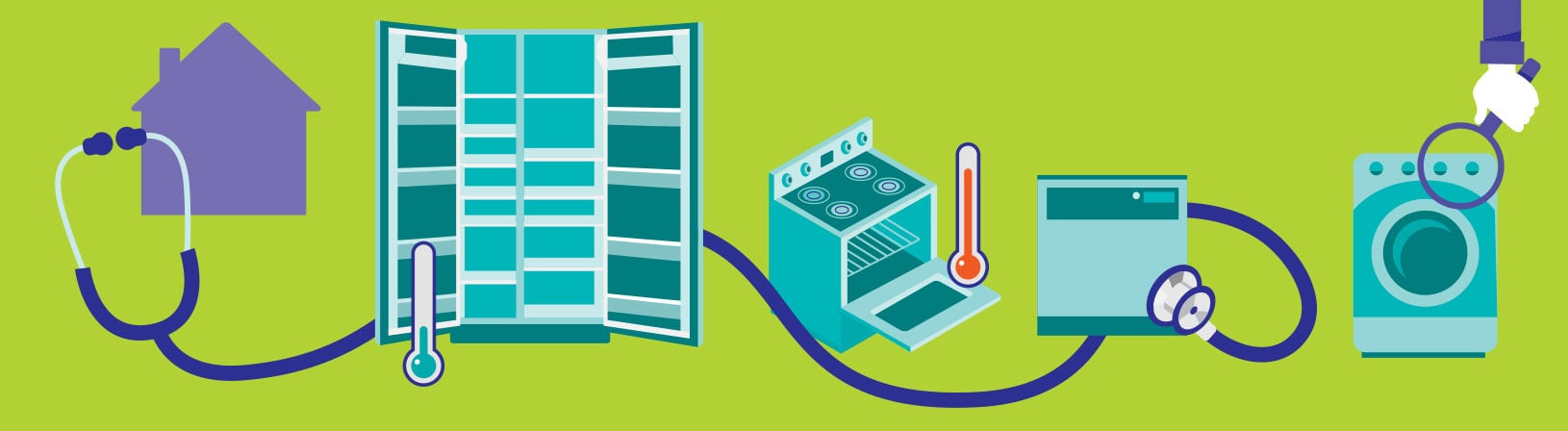
A smart home appliance inspection can save you from unexpected costs and headaches.
Today, we’ll walk you through the four most important appliances to check and exactly what to look for so you know whether buying the home also means buying home appliances soon.
Your 4-Step Home Appliance Inspection Checklist
1. Refrigerator
Why It Matters: Refrigerators are among the most expensive and frequently used home appliances. A faulty fridge can lead to food spoilage, water damage, and costly repairs.
What to Check:
- Cooling test: Is the fridge cooling to around 37–40°F and the freezer to 0°F?
- Interior rust: Rust or corrosion inside may signal excess moisture or leaks.
- Seals and gaskets: Close the door on a dollar bill. If you can easily pull it out, the gasket may need replacing—impacting energy efficiency.
- Noise level: Loud humming or clicking could signal a failing compressor or fan motor.
Replacement Cost: Up to $1,800* (Remember: A repair through a home warranty is often much more affordable than an appliance replacement!)
2. Range (Oven & Cooktop)
Why It Matters: Whether you cook every day or just reheat leftovers, a working range is essential. Without a working oven and burners, you’ll have a difficult time feeding yourself!
What to Check:
- Burner test: Make sure each burner heats evenly and consistently.
- Oven and broiler: Test all settings to verify heating accuracy and performance.
- Seals and lights: Confirm the door seals tightly and the light functions properly.
- Safety check (gas models): Check for gas smell and that the igniter clicks properly.
Replacement Cost: Up to $1,000*
3. Dishwasher
Why It Matters: A broken dishwasher can quietly lead to costly water damage under your sink or flooring—and they’re not cheap to replace.
What to Check:
- Startup and door: The door should open and close smoothly. A door that drops quickly could mean a faulty spring.
- Rust or corrosion: Especially around the heating element or door hinges.
- Leaks: Run a quick cycle and check under the unit and around the base for water leaks.
- Drying power: If steam doesn’t release after the cycle or water remains in the bottom, the heating or drain pump may be failing.
Replacement Cost: Up to $900*
4. Washer & Dryer
Why It Matters: Washers and dryers are often overlooked in home inspections—yet a broken washer can cause flooding, and a faulty dryer can be a fire hazard.
What to Check:
- Test run: Run a short cycle to assess water flow, drainage, and spin speed.
- Dryer venting: Make sure the outdoor exhaust flap opens when the dryer is on. Clogged vents are a leading fire risk.
- Lint buildup: Check the lint trap and surrounding areas for excessive buildup.
Replacement Cost: Up to $850 for washer, up to $800 for dryer*
Do Houses Come With Appliances?
Short answer: It depends. In most home sales, major kitchen appliances (like the oven, dishwasher, and refrigerator) are included—but they’re not guaranteed. Washers and dryers are often negotiable.
Always review the inclusions list in the purchase agreement or ask your real estate agent directly.
Do Home Inspectors Check Appliances?
Some do—but not all. Many home appliance inspections are limited to built-in units like ovens and dishwashers. Portable or optional items, like washers and refrigerators, may be skipped entirely. And even if they test them, it’s often limited to a basic “on/off” test—not an in-depth performance check.
That’s why it’s smart to run your own tests or ask the seller to verify functionality.
Final Thought: Protect Your Budget With a Home Warranty
Even a perfect-looking appliance can fail soon after you move in. A home warranty could help you protect your budget when covered systems and appliances, like the ones mentioned above, experience covered breakdowns.
Explore protection plans from 2-10 Home Buyers Warranty.
*Repair/replacement cost is the eightieth percentile as reported in a nationwide survey of homeowners conducted in 2024 by ClearVantage for Frontdoor, Inc.